Beyond the Minerals: Planning, Technology, and the Future of Kenyan Mining

ASM 16 Mar , 2026

This is a guest blog authored by Liza Ayoo, Research, Policy and Advocacy Manager at the Kenya Chamber of Mines. Liza is one of the ten (10) winners of the 2026 community voices video competition hosted by The Impact Facility, in partnership with Mining Indaba that invited community members, representatives of indigenous peoples in mining areas, civil society organisations, activists and visionaries to reflect on the MI26 theme, “Stronger Together: Progress Through Partnership,” and how it relates to their lived experiences.

Liza attended Mining Indaba 2026 in Cape Town from 9 – 12 February in Cape Town, South Africa, and this blog summarises their experience at the conference.  More information about the competition is available here.


Reflections from the Investing in African Mining Indaba 2026

Let me take you through my thought process when I got the news that I would be attending the Investing in African Mining Indaba 2026, courtesy of The Impact Facility. I did lots of research, and one fact immediately caught my attention: Did you know that more than a third of all the gold ever mined in human history comes from a single geological formation in South Africa? The Witwatersrand Basin has shaped the country’s reputation as one of the world’s most influential mining jurisdictions. Alongside gold, South Africa hosts vast reserves of platinum-group metals, manganese, chrome, coal, and diamonds, making mining a central pillar of its economy. Today, the sector contributes roughly 7–8% of South Africa’s GDP and supports over 450,000 direct jobs.

As appealing as this information was, I had yet to experience it first-hand. So, fast forward, travelling from Nairobi to Cape Town, these facts lingered in my mind and began to feel real even before I arrived at the Investing in African Mining Indaba. As our plane descended, I noticed open mining sites etched into the landscape below. But what struck me even more happened moments later at the airport.

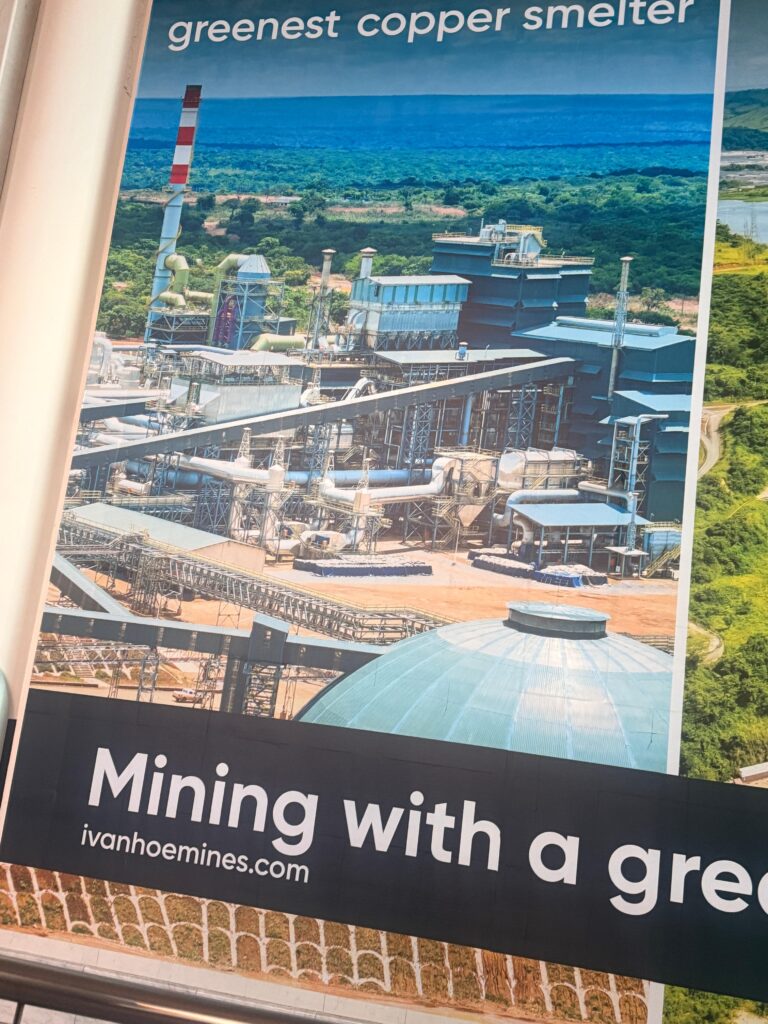
Before I had even cleared customs, South Africa was already telling its mining story. Displays and messaging proudly marketed the country as a mining destination. By the time I stepped outside the terminal, I had already learned several facts about the sector. For example, I learnt about companies like Ivanhoe Mines, whose Kamoa-Kakula complex is often described as one of the lowest-carbon copper producers globally, reflecting the industry’s gradual shift toward cleaner mining systems.

Mining industry display at Cape Town International Airport highlighting Ivanhoe Mines’ copper project.

This wasn’t something I expected from the airport. But it immediately raised an interesting question in my mind: What if African countries treated their natural resource sectors as strategic national narratives, not just economic activities? Coming from Nairobi, the contrast was striking. In Kenya, mining contributes less than 1% to GDP, despite the presence of minerals such as gold, soda ash, fluorspar, titanium, and emerging critical minerals. Like many Kenyans, my early understanding of the industry was shaped by this modest footprint. I had often heard that countries like South Africa, Ghana, Mali, and Burkina Faso were giants in mining, but I had not fully grasped the scale of their influence until I attended Indaba.

Walking into the conference, I carried four personal objectives. First, I wanted to explore opportunities for mining education in Africa. Conversations with representatives from AusIMM (The Australasian Institute of Mining and Metallurgy) highlighted the growing importance of professional development and technical training across the continent. According to the World Bank, Africa will require tens of thousands of additional skilled geologists, mining engineers, and environmental specialists by 2030 as mineral demand grows in response to the global energy transition.

This raised another reflection: if Africa holds roughly 30% of the world’s mineral reserves, are we investing equally in the human capital needed to responsibly manage them? My second objective was to understand Ghana’s mining ecosystem, given the fact that it has made significant progress with artisanal and small-scale mining (ASM) formalisation. This led me to the Ghana Exhibition stand, including their Chamber of Mines, where I initially hoped to learn about the country’s progress in formalising ASM. Kenya is currently navigating this stage, so understanding Ghana’s journey felt particularly relevant.

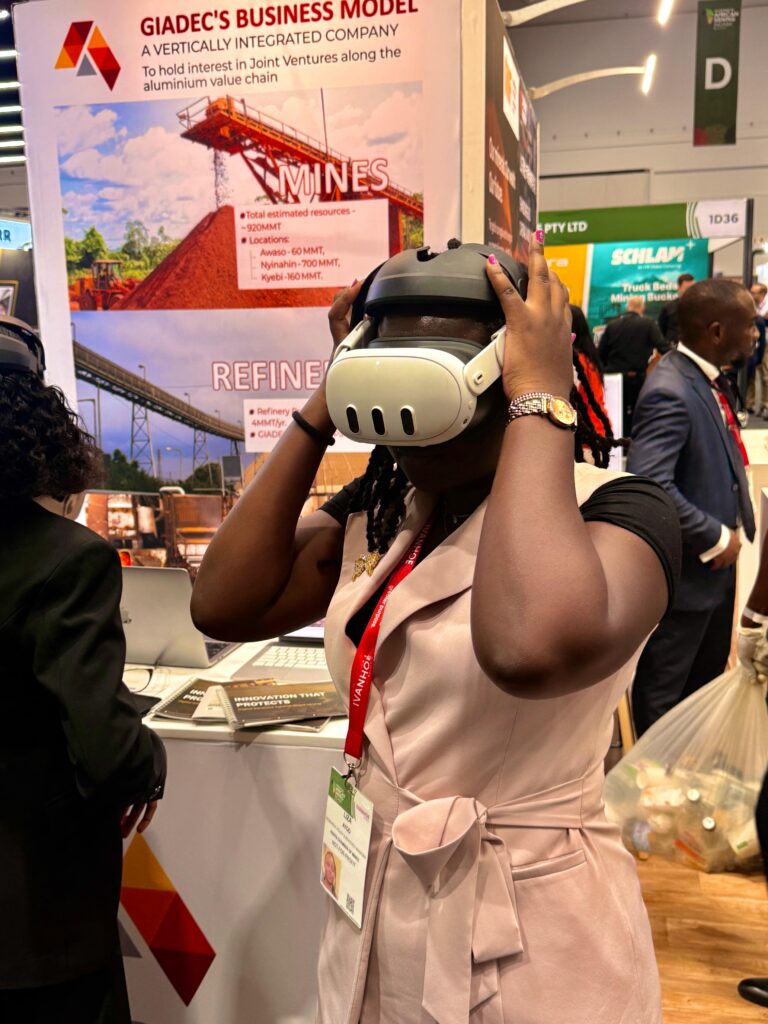
What I encountered went beyond policy discussions. Through the Ghana Integrated Aluminium Development Corporation, I experienced how virtual reality (VR) technologies are now being used to visualise and monitor mining operations remotely. Standing in South Africa, I was able to observe a mine site in Ghana in three-dimensional detail.

Demonstration of VR technology used to visualise and monitor mining sites.

Technologies like VR are now being used not only for operational efficiency but also for training, risk management, and stakeholder engagement, allowing teams to anticipate challenges and improve decision-making across the mining lifecycle. Across several sessions at Indaba, speakers repeatedly emphasised that digital technologies such as AI, remote sensing, and real-time data monitoring are becoming essential tools for modern mining governance (Mining Indaba Programme, 2026).

The conversations around Ghana’s success pointed consistently to one foundation: 

  1. Strong regulatory frameworks
  2. Policy clarity and systems that support both investors and communities

My curiosity also led me to Botswana, a country widely recognised for its mining governance reforms. Botswana’s diamond industry has long demonstrated how stable policies, strong institutions, and transparent partnerships can transform mineral wealth into national development. Since independence, Botswana has transformed diamond revenues into infrastructure, education, and public services, with mining contributing approximately 20% of GDP and over 80% of export earnings. I learnt that mineral wealth alone does not determine national prosperity; governance does.

Another important objective was speaking to exploration and mining companies represented from Australia, Canada, Brazil, and South Africa. I wanted to understand what would attract them to establish operations in Kenya. Their responses were remarkably consistent.

Investors look for:

  1. Policy certainty
  2. Reliable geological data
  3. Transparent licensing systems
  4. Infrastructure access
  5. Stable governance institutions

In other words, the attractiveness of a mining jurisdiction depends as much on systems and trust as it does on the minerals themselves. According to the Fraser Institute’s Annual Survey of Mining Companies, regulatory uncertainty and policy instability are among the top deterrents to mining investment globally. Throughout the exhibition halls, one theme became increasingly clear: Africa’s mining sector is becoming more strategic, competitive, and collaborative. Engaging with Chambers of Mines, development partners, financial institutions, and industry leaders reinforced an important point: countries that are intentional about policy certainty, transparency, and institutional strength are positioning themselves as serious mining destinations.

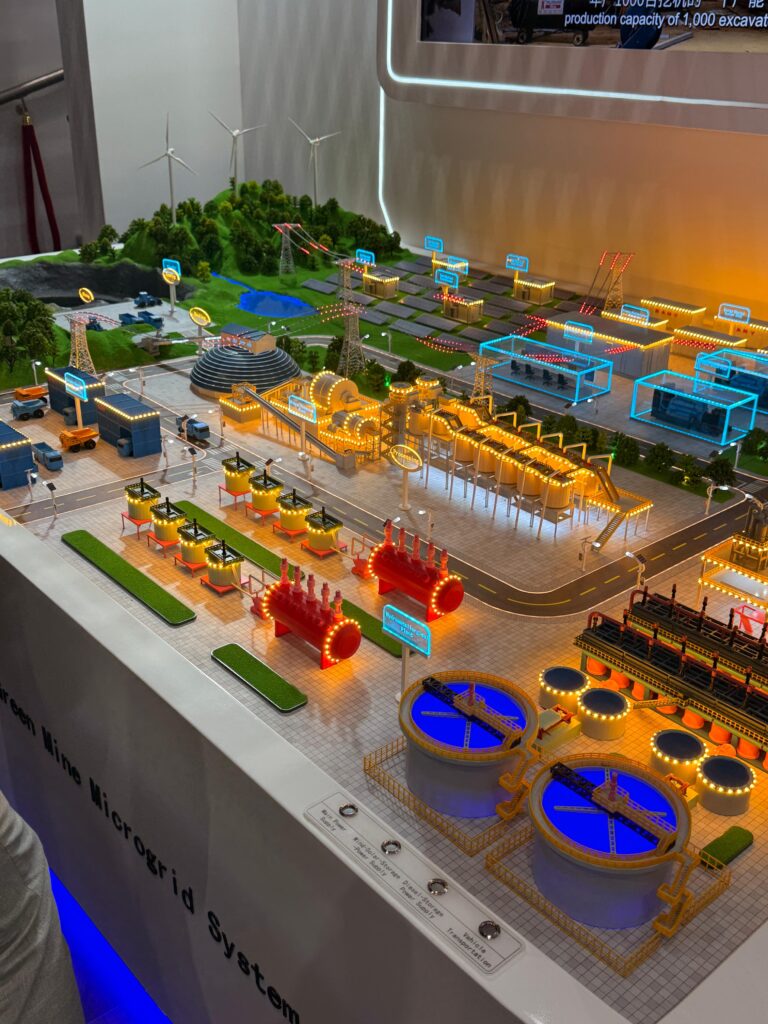
Kenya holds significant potential, but unlocking it will require continued improvements in regulatory frameworks, sector coordination, and global visibility. Beyond policy discussions, what fascinated me most was the growing intersection between technology and mining. Companies like LiuGong Machinery introduced electric mining fleets, while SANY Zimbabwe showcased a broader ecosystem approach where electric equipment operates alongside solar-powered microgrids at the mine site.


Display by SANY Zimbabwe highlighting integrated mining systems.

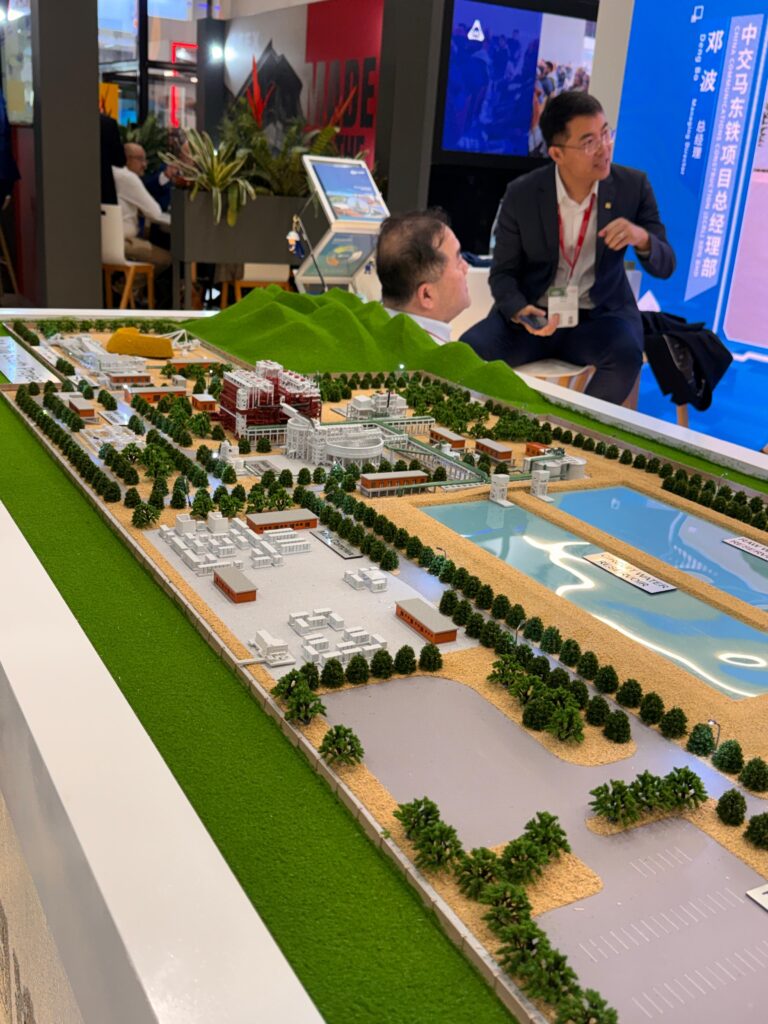
These models illustrated a powerful shift: mines are no longer designed purely around extraction but around integrated energy, logistics, and environmental systems. Walking through these models also reminded me that mining is ultimately a planning exercise. Modern mines are designed as interconnected systems, combining electrified fleets, processing facilities, water management systems, infrastructure corridors, and energy networks. Spatial planning decisions made at the earliest stages determine everything from environmental impacts to community outcomes.

In many ways, a modern mine now functions like a carefully planned industrial ecosystem, where geology, engineering, environmental safeguards, and social considerations intersect. This perspective aligns closely with emerging global discussions around “mine-to-market systems planning,” where mining projects are viewed as integrated development corridors rather than isolated extraction zones.

But another fascinating insight I encountered was how some countries are integrating mining into their financial systems. For example, Mali has taken steps to connect its mining sector more directly with the financial ecosystem, enabling mining companies and suppliers to access structured financial services through local banks. One example is AFG Bank Mali’s Local Content Compliance Program (LCCP), which supports local enterprises in mining value chains by facilitating financing and capacity-building.

This initiative strengthens local participation and economic integration within the mining sector, ensuring that benefits circulate within national economies rather than remaining concentrated among external actors. More information about this initiative can be found here.

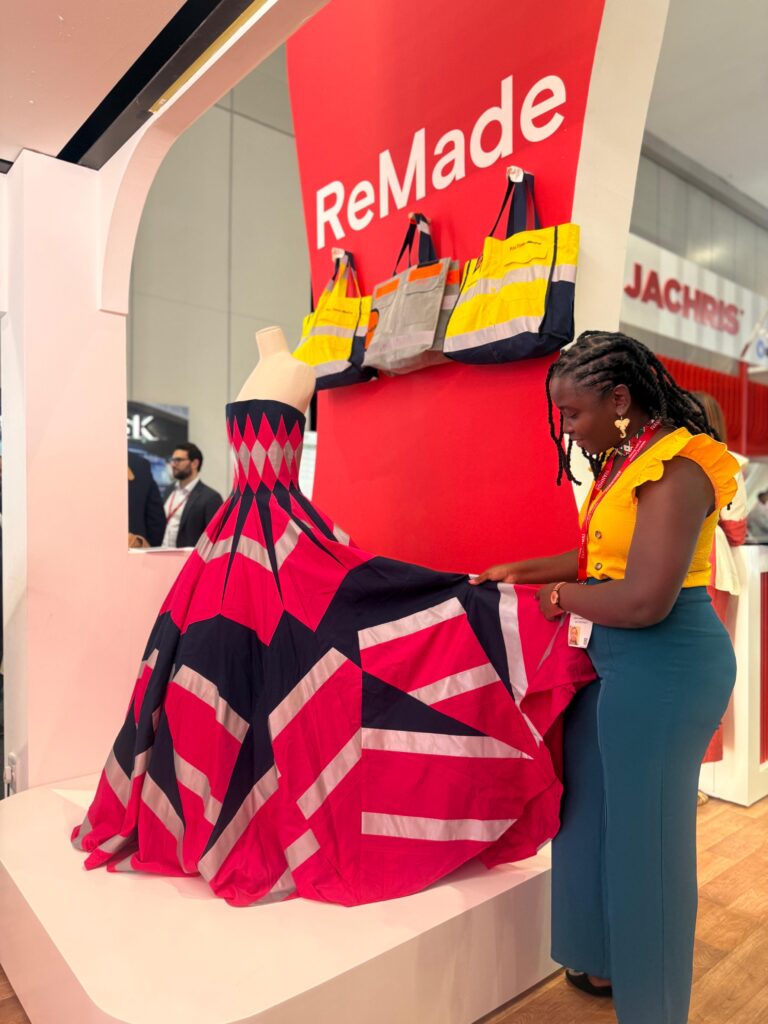
This raised an important point for me: if financial systems can support agriculture and manufacturing, why shouldn’t they be equally integrated into the mining value chain? As the event continued, my attention gradually shifted toward another important conversation emerging across the industry: sustainability and circularity. And this is where one of the most unexpected yet powerful moments of the event appeared. One of the most inspiring sustainability showcases I experienced was Rio Tinto’s “ReMade” initiative. Displayed at their stand were dresses and bags created from repurposed mine-site materials such as old overalls and reflective safety jackets. Materials that would normally be classified as waste had been transformed into something creative and functional.

Dresses and bags made from recycled mining overalls and safety gear at Rio Tinto’s ReMade display.

It was a reminder that sustainability in mining is not only about compliance and mitigation. It is also about creativity, partnerships, and new value streams. Standing there, I found myself asking a broader question: What if mining waste could be reimagined not as the end of a material’s story, but as the beginning of another value chain? Largely, the experience at Mining Indaba 2026 reinstated a powerful lesson for me. The future competitiveness of mining jurisdictions will depend not only on mineral potential but also on their ability to govern technology, strengthen institutions, plan spatially, integrate financial systems, and build trust across stakeholders. And for Kenya, the opportunity ahead is not simply to mine more. It is to mine smarter, plan better, and position the sector strategically within Africa and the world. Because beyond the minerals themselves lies something even more important: the systems, ideas, and collaborations that determine how those minerals shape our economies, landscapes, and futures.